AI Tilt-Shift Miniature Video Generator
Explain how cities, supply chains and everyday systems work, with every scene drawn as a tilt-shift toy diorama seen from above.
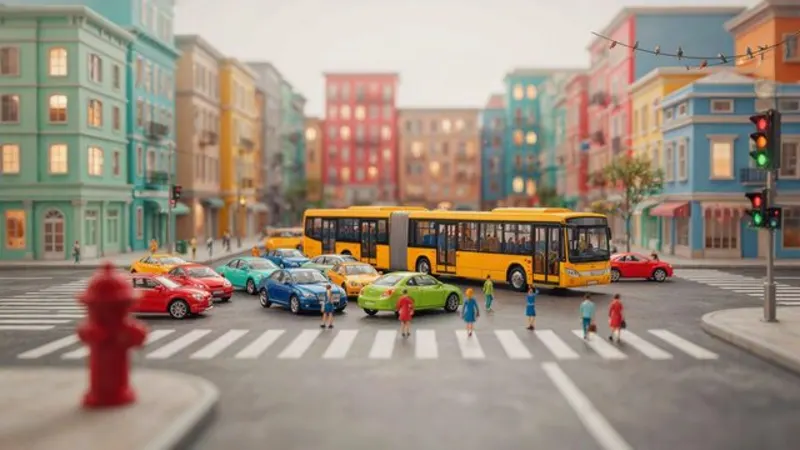

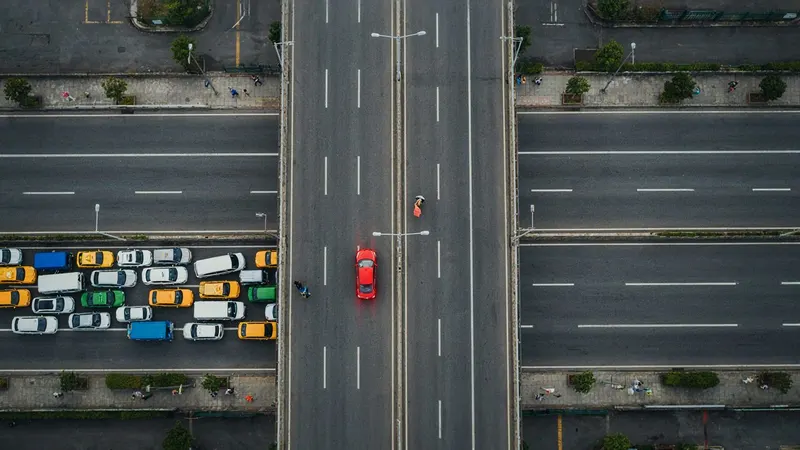
AI images · Natural pace · Music · Transitions · Can be animated
Opens ShortFast with the Tilt-Shift Miniature style selected. Create an account to generate.
Create a tilt-shift miniature videoThe miniature look is tilt-shift: a real-world scene seen from above with a narrow band of sharp focus and blurred edges, so cities, harbors and highways look like a model railway set on a table. Tiny cars, toy-like buildings, saturated color and bright daylight make large systems feel small enough to understand, which is why the look suits videos about how cities, economies and supply chains work.
ShortFast builds the whole video in that look. Give it a topic like "How global shipping moves everything you own" or paste a script, and it writes or keeps the narration, splits it into scenes and draws each one as a miniature diorama. The scene planner keeps one palette and one world across the video, so the port in scene two and the warehouse in scene nine feel like parts of the same model.
Making a tilt-shift miniature video
- 01
Describe the topic or paste a script
Start from an idea such as "How a city wakes up in the morning", or paste a script you already wrote and ShortFast keeps your words.
- 02
The AI splits it into scenes
Every scene gets its own picture, and a shared palette, setting and recurring characters keep each image in the Miniature World look from the first scene to the last.
- 03
Voice, captions and pacing
Pick one of 21 narration voices. Captions are burned in, and the Miniature World defaults (natural pace, background music, transitions) are already set. You can change any of them.
- 04
Download, post or run a series
Download the video, auto-post it to TikTok, YouTube Shorts and Instagram Reels, or turn the theme into an automated series that makes a new episode on a schedule.
Why a toy-scale world makes big systems easy to follow
Tilt-shift works by tricking the eye. The blur at the top and bottom of the frame mimics the shallow depth of field of a close-up lens, so the brain reads the scene as small and near. That change in scale changes how viewers take in information: instead of an overwhelming aerial shot of a city, they see a tidy model they can scan at a glance, with every road, crane and train clearly placed.
That makes it a natural fit for explaining systems. A traffic jam, a port, a power grid or a morning commute is about many small parts acting on each other, and a diorama shows all the parts at once. The toy quality also adds a light, curious tone, so a dry subject like container logistics feels like watching a model railway rather than reading a report.
Cities, economics and logistics, and where miniatures add nothing
The sweet spot is anything with a map-like shape or a journey: how a city wakes up, why traffic jams form out of nowhere, the journey of an everyday product from factory to doorstep, how a food supply chain works, why some towns boomed while others emptied. Economics explainers use it well, because flows of money and goods become little trucks and ships moving between places.
It adds little to stories about a single person, to emotions, or to anything happening indoors at human scale. A close-up conversation loses the effect entirely, since tilt-shift needs distance and a wide view to read as miniature. Abstract ideas with no physical place, such as a psychology concept, are better served by a cartoon explainer or stick-figure style.
Keep the numbers honest. Economics and logistics audiences check figures, so source every statistic in the script. The dioramas are illustrative and do not show real data, maps or routes. If a number matters to the point, say it in the narration and let the burned-in captions carry it, rather than expecting it to appear inside the image.
Pacing a miniature explainer so the model world pays off
Structure the script as a journey or a zoom. Start wide on the whole system ("Every morning, an entire city wakes up at once"), then move through it in order: the trains, the roads, the port, the shops. Each stop is one scene. Following a single object, like one shipping container or one delivery truck, gives the viewer a thread to hold through a busy world.
The style starts on a normal pace, with music and transitions on. Around five seconds per image gives viewers time to scan a busy diorama, which is the pleasure of this look, and faster cuts would throw that detail away. Light music keeps the toy-town mood and transitions smooth the move from one location to the next. For a calm city tour, set the pace to slow.
Miniatures animate well because the eye expects tiny traffic and moving boats. Animate images turns each diorama into a short clip in the same tilt-shift look, at more credits billed per second of video, on videos up to two minutes. For longer economics deep dives, 16:9 videos of 8 to 15 minutes are available on the Advanced plan.
Run it as an automated series
Give ShortFast one theme and it makes a new tilt-shift miniature video on a schedule, every day, twice a day or a few times a week. Each episode covers a new topic on the theme, and the video is emailed to you or posted to your accounts. Themes that work well in this style:
- How a big city system works, one per video
- The journey of an everyday product, each time
Niches that suit this style
Facts
A playbook for running a faceless facts channel: formats that add editorial value, ready-to-use hooks, a full sample script, what to put on screen, and an honest look at RPM and YouTube's inauthentic-content rules.
Open NicheFinance
A playbook for running a faceless finance channel: personal finance, investing and money explainers built from stock footage and narration. Formats, hooks, a sample script, RPM ranges and the monetization path.
OpenCommon questions
- What makes a tilt-shift scene look convincingly miniature?
- A high viewing angle, a narrow band of focus, bright even daylight and lots of small repeated objects like cars, trees and windows. The style's art direction handles all of that. Your part is to write scenes that have scale: streets, ports, stadiums, rail yards. A single object in close-up does not read as miniature, so keep scenes wide.
- Does the video look like one model world or a set of random dioramas?
- One world. Before drawing, the AI that splits your script into scenes writes a shared palette, setting and recurring elements, and the miniature art direction leads every image prompt. If your script follows one city or one delivery truck, that thread carries across the scenes. Naming the place early in the script helps it stay consistent.
- Can a miniature explainer channel be monetized?
- Platforms decide, and nothing guarantees it. They reward original, non-repetitive content with real value, and explainers have an edge when each video teaches something specific and accurate. A distinct look helps a channel get recognized, but the substance is the script: checked facts, a clear angle and a new question per video, not the same video with a different city name.
- Can I automate a series of miniature videos?
- Yes. Choose a theme such as "How a big city system works, one per video" or "The journey of an everyday product," pick a schedule (daily, twice a day, three times a week or weekly), and ShortFast makes a new episode on a new topic each time. You get an email with a download link, or it posts automatically.
Other 3d styles

3D Animation
Animated-movie characters
Great for Kids · Fun facts · Stories
AI images · Natural pace · Music

Claymation
Handmade stop-motion clay
Great for Food · Funny · Kids
AI images · Natural pace · Music

Science 3D
Microscopic medical renders
Great for Health · Biology · Medicine
AI images · Natural pace · Music
Make your first tilt-shift miniature video
ShortFast writes the script, draws every scene in this style, adds the voice and captions, and can post it for you every day.