AI Comic Book Video Generator
Tell a heist, an escape or a legend as a narrated comic, with a new inked panel for every beat of the story.
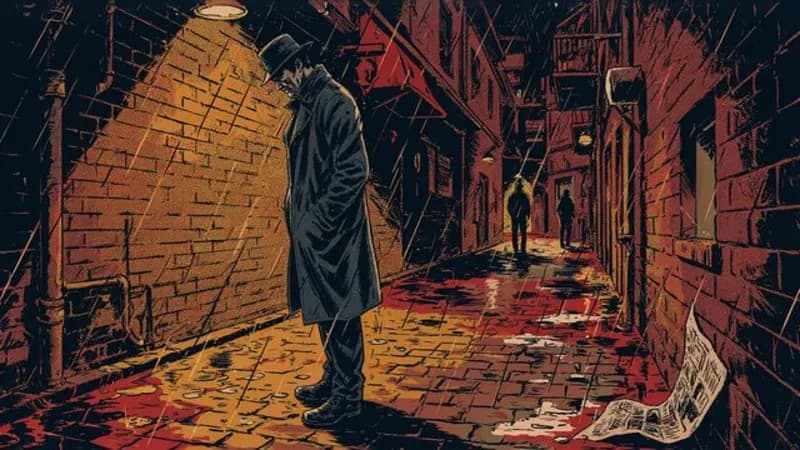
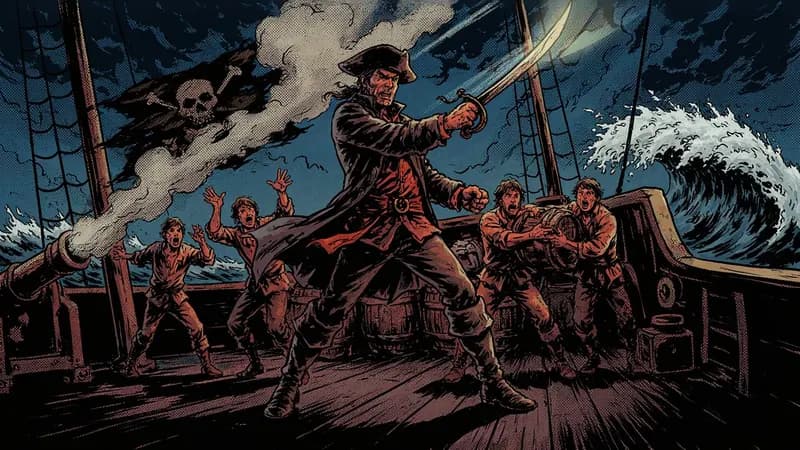
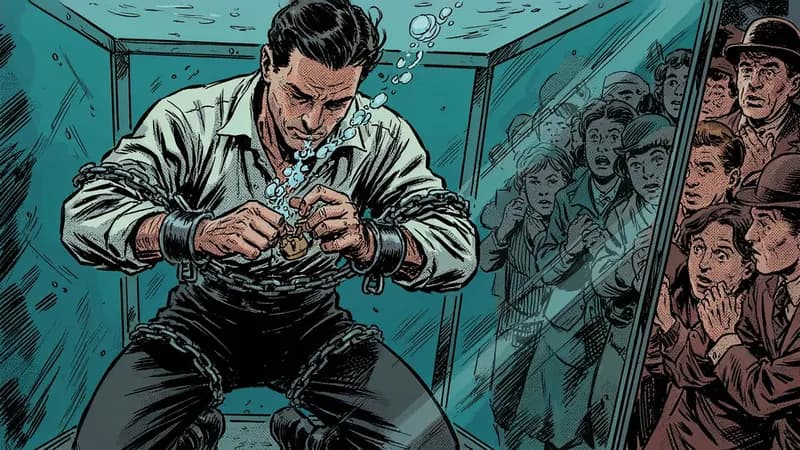
AI images · Natural pace · Music · Hard cuts · Can be animated
Opens ShortFast with the Comic Book style selected. Create an account to generate.
Create a comic book videoThe comic book look is bold inked linework, halftone dot shading, heavy black shadows and vivid flat color, framed from dramatic low and high angles. It borrows the grammar of printed graphic novels, where every image is a moment of action frozen at its most interesting point. That makes it a natural fit for stories with momentum: prison escapes, pirate legends, great heists and rivalries that ended badly for someone.
ShortFast turns a topic or a pasted script into that kind of video. It writes the story or keeps yours exactly, picks a narration voice, splits the plot into scenes and draws each beat as a comic panel with the same characters, setting and palette from start to finish. Background music and burned-in captions are added, and the video downloads or posts to TikTok, YouTube Shorts and Instagram Reels.
Making a comic book video
- 01
Describe the topic or paste a script
Start from an idea such as "The most daring prison escape in history", or paste a script you already wrote and ShortFast keeps your words.
- 02
The AI splits it into scenes
Every scene gets its own picture, and a shared palette, setting and recurring characters keep each image in the Comic Book look from the first scene to the last.
- 03
Voice, captions and pacing
Pick one of 21 narration voices. Captions are burned in, and the Comic Book defaults (natural pace, background music, hard cuts) are already set. You can change any of them.
- 04
Download, post or run a series
Download the video, auto-post it to TikTok, YouTube Shorts and Instagram Reels, or turn the theme into an automated series that makes a new episode on a schedule.
Frozen action, dramatic angles and halftone shadows
Comics tell stories with still images, so their visual language is built to imply motion. A figure mid-leap, a low angle looking up at a ship's captain, a close-up of hands on a lock: each panel picks the instant just before or after something happens, and the viewer's mind supplies the rest. On a phone screen that implied motion feels more alive than most still illustration.
The heavy shadows and halftone dots do the mood work. Deep blacks make a scene feel tense or dangerous, and flat bright color keeps the hero and the threat easy to tell apart at a glance. The result reads as heightened reality, which gives a true story a larger-than-life feel without claiming to show what actually happened.
That last point matters for history-based stories. A comic panel is openly an interpretation, so a video about a real escape or a real pirate never pretends to be footage or a photograph. The audience understands they are watching a retelling, and the drama of the style is part of the appeal rather than a distortion.
Built for true stories with a plot, not for lessons
The style needs a plot. The strongest topics have a protagonist, an obstacle and a turn: the most daring prison escape in history, the rise of the most feared pirate who ever lived, how Houdini escaped everything, a sporting rivalry that ran for decades. Heists, cons, survival stories, legendary duels and underdog wins all fit, whether they come from history, sport or folklore.
It is a poor fit for teaching. A comic panel about compound interest or how vaccines work adds drama the concept does not need, and diagrams get lost in the shadows. It also sits awkwardly with calm, reflective or devotional content, where the visual intensity fights the tone of the script. If the video is a lesson, a whiteboard or flat vector style will serve it better.
Writing a comic video as a sequence of panels
Think of the script as a page layout. Each sentence should describe one moment you could draw: the guard turns away, the rope drops, the wall gives. ShortFast's scene planning turns those moments into panels, so a script written in concrete actions produces a stronger comic than one written in summaries. Open in the middle of the action and explain how the character got there second.
The defaults for this style are normal pace, music on and transitions off. Normal pace moves to the next panel when the story moves, around every five seconds, so each image has time to register. Music carries momentum between beats, and hard cuts mimic the jump from one panel to the next, which a slide or a fade would soften.
Speech bubbles are the one comic convention to leave out. The narration and burned-in captions already carry the words, and lettering inside AI images tends to come out garbled. For a longer story, 2 to 3 minutes gives a heist room for a proper setup, and the Advanced plan allows 8 to 15 minutes for a full episode.
Run it as an automated series
Give ShortFast one theme and it makes a new comic book video on a schedule, every day, twice a day or a few times a week. Each episode covers a new topic on the theme, and the video is emailed to you or posted to your accounts. Themes that work well in this style:
- The most daring heists in history, one per video
- A legendary rivalry told like a comic, each time
Niches that suit this style
History
A playbook for running a faceless history channel: the formats that get watched, ready-to-use hooks, a full sample script, what to put on screen, and an honest look at RPM and how long monetization takes.
Open NicheSports
A playbook for a faceless sports channel: athlete stories, records and explainers built on licensed stock footage rather than rights-restricted game clips, with formats, hooks, a script and earning ranges.
OpenCommon questions
- Should the panels include speech bubbles and sound effects?
- Leave them out. AI images are unreliable at lettering, and the words already reach the viewer through the narration and burned-in captions. Let each panel carry the action through pose, angle and shadow instead. A close-up of a hand on a lock needs no text inside the image to feel tense.
- Will the hero look the same from panel to panel?
- That is how the scenes are built. The comic book art direction leads every image prompt, and the AI that splits the script writes recurring characters, a shared setting and a palette inside the style. The pirate captain in the opening panel is described the same way in the final one, so the story reads as one comic rather than a pile of unrelated covers.
- Can I monetize comic book story videos?
- Nothing guarantees it. Platforms reward original, non-repetitive stories that give viewers something real, and they exclude mass-produced uploads that recycle the same plot. Research each story, write a script for it, and do not retell other creators' videos. A channel of well-told, distinct true stories stands on much firmer ground than one churning out variations of a single template.
- Can the panels be animated, or run as a series?
- Both. Animate images turns every panel into a short AI clip in the same comic style for videos up to 2 minutes, billed per second of video. For a series, set a theme like the most daring heists in history, one per video, and a schedule. Each episode tells a new story and is emailed to you or posted automatically.
Other illustrated styles
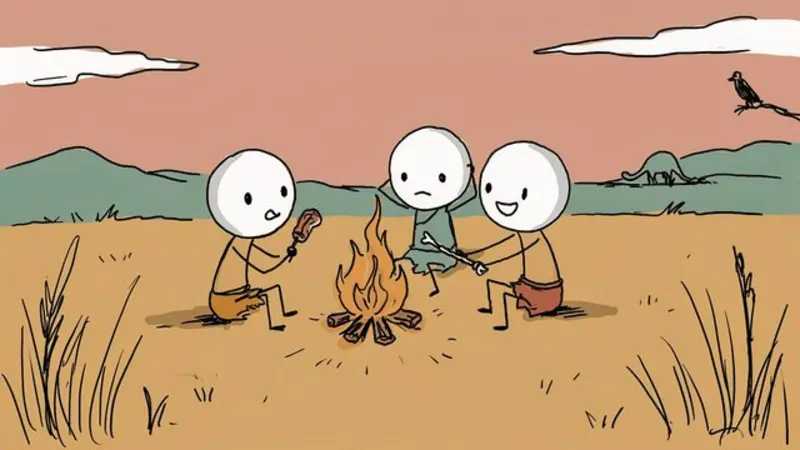
Stick Figures
Hand-drawn doodle characters
Great for History · Psychology · Explainers
AI images · Fast cuts · No music
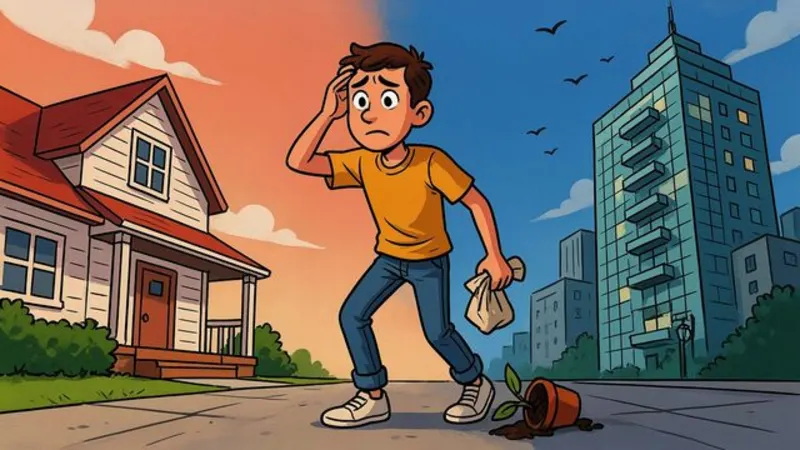
Cartoon Explainer
Bold, expressive YouTube cartoon
Great for Finance · Business · Explainers
AI images · Natural pace · No music

Anime
Cel-shaded, painted skies
Great for Stories · Life lessons
AI images · Natural pace · Music

Flat Vector
Clean shapes, science-explainer look
Great for Science · Space · How it works
AI images · Natural pace · Music
Make your first comic book video
ShortFast writes the script, draws every scene in this style, adds the voice and captions, and can post it for you every day.